

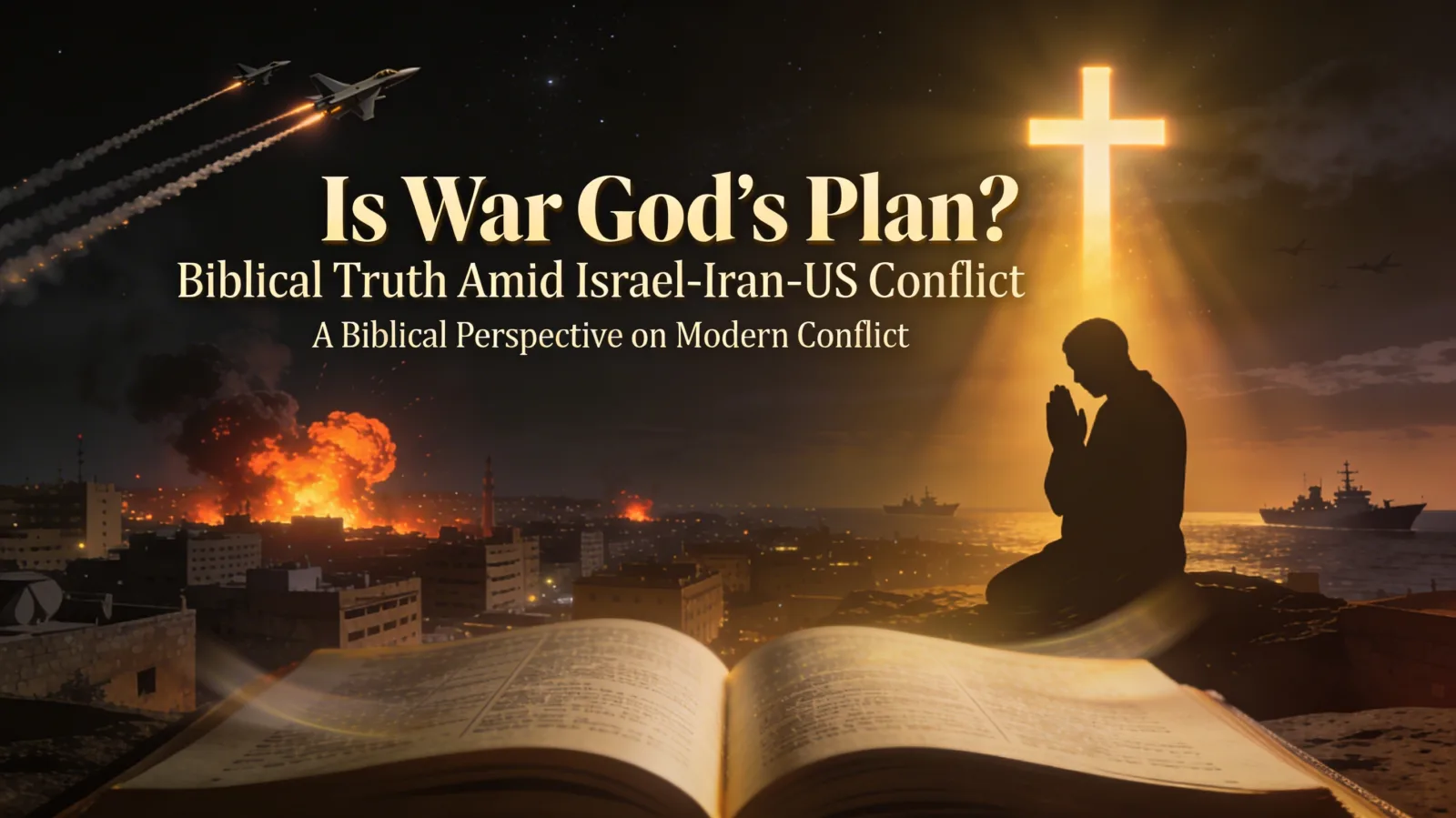
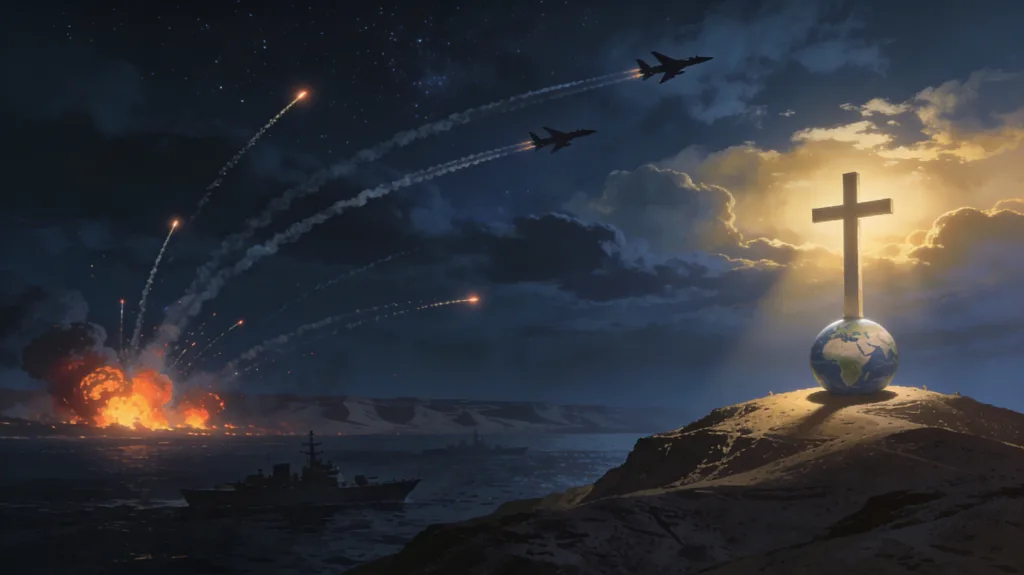
At midnight on March 5, 2026, explosions lit up Tehran's skyline as Israeli F-35s unleashed the 11th wave of airstrikes on Iranian regime targets—command centers, missile sites, and IRGC compounds—while US forces sank an Iranian warship off Sri Lanka, marking a dramatic escalation in the Israel-Iran-US conflict.
Air raid sirens wailed in Tel Aviv and Jerusalem as Iran retaliated with barrages on Israeli cities and US bases, drawing in Hezbollah from Lebanon and spiking global oil prices by threatening the Strait of Hormuz. Is this chaos God's divine plan unfolding before our eyes or a tragic human failure?
As President Trump pushes for influence over Iran's next leader after the reported death of Ayatollah Khamenei, believers worldwide ask: Does Scripture affirm war as part of God's sovereign design
This blog dives deep into that provocative question, weaving biblical wisdom with real-time stories from the 2026 Middle East war. From ancient battles where God commanded victory to end-times prophecies spotlighting Persia (modern Iran), we'll uncover if—and when—war aligns with heaven's blueprint.
1. Biblical Foundation: God as Warrior King
The Bible doesn't shy from war; it portrays God as a mighty warrior who fights for His people. Exodus 15:3 declares, "The LORD is a man of war; the LORD is his name," celebrating His drowning of Pharaoh's army in the Red Sea. This isn't abstract—it's history's first mass deliverance, where God parted waters and buried enemies under them, proving His plan includes decisive conflict against oppressors.
Consider Joshua's conquest of Jericho. God instructed silence for six days, then a shout on the seventh, toppling walls without a single sword stroke (Joshua 6:20). This divine strategy echoes in today's Israel-Iran war: Israeli airstrikes have hit over 2,500 targets with 6,000 weapons, often preempting Iranian launches through intelligence miracles akin to biblical spies. Christians see God's hand when nations defend the vulnerable, as Deuteronomy 20:1-4 urges Israel not to fear superior forces because "the LORD your God... will be with you."
Yet war isn't God's preference; it's a fallen world's reality. Ecclesiastes 3:8 notes "a time for war and a time for peace," balancing His sovereignty with human sin (Romans 3:10-18). In the current conflict, US Senate rejection of war powers limits continued strikes on Iran, mirroring Romans 13:4, where governments "bear the sword" as God's servants against evil.
God's sovereignty means He holds absolute control; nothing happens outside His wise governance. Jeremiah 29:11 declares, "For I know the plans I have for you... plans to prosper you and not to harm you." Yet the Bible records wars where God directly intervenes, raising a tension: Is violence ever His will?
In the Old Testament, God commanded specific wars for judgment, like against the wicked Canaanites to protect Israel. Deuteronomy 20:17 instructs total destruction of certain nations to prevent idolatry. These weren't random; they were divine justice against entrenched evil.
2. The Big Question: Is War God’s Plan or Just Human Evil?
Many Christians see these headlines and ask, “If God is good and sovereign, why does He allow war?” That is really a question about God’s plan.
The Bible gives us three truths that must be held together:
-
God is absolutely sovereign over history, including war.
-
Human beings are truly responsible for their choices, including violence and aggression.
-
God can use even sinful wars to accomplish His purposes without endorsing the sin itself.
The book of Ecclesiastes says, “To everything there is a season, and a time to every purpose under heaven… a time to love, and a time to hate; a time of war, and a time of peace.” That verse does not cheer for war, but it does recognize that in a fallen world, war becomes part of the way God works out justice, judgment, and even rescue.
Romans 8:28 then pushes deeper: “And we know that in all things God works for the good of those who love him.” “All things” includes peace and conflict, victory and loss. God does not call every war “good,” yet He promises to weave even war into a good outcome for His people.
When you ask, “Is war God’s plan?”, the answer is: war is never the pure, perfect will God revealed in Eden or promised in the New Creation, but He does permit and direct wars at times to stop greater evil, protect His people, or bring nations to repentance.
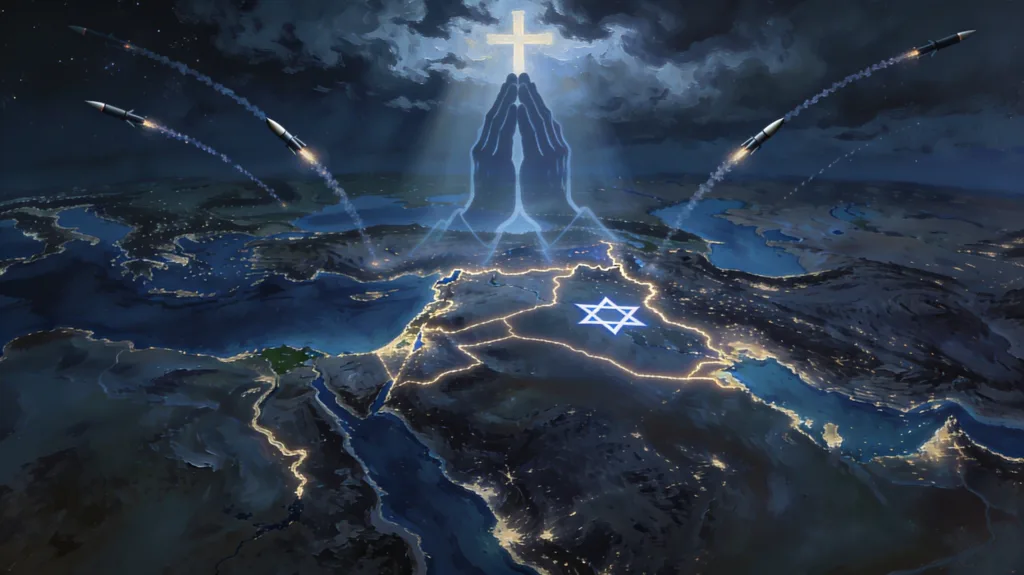
3. Bible Stories Where God Uses War in His Plan
To understand the current Israel–Iran–US war, we need to look at how God has used wars in Scripture.
3.1 God Fights for His People: Exodus and Joshua
In Exodus, Israel faced Pharaoh’s army at the Red Sea with no way out. God told Moses, “The LORD will fight for you; you need only to be still.” God used the sea itself as His weapon to drown the pursuing chariots and rescue His people.
In Joshua 10, God threw hailstones from heaven and miraculously extended the day so Joshua could win a decisive battle against a coalition of kings. The text notes that more enemies died from the hail than by Israel’s swords, making it clear who was truly in charge.
Similarly, the fall of Jericho in Joshua 6 was not a normal military campaign. Israel marched, blew trumpets, and shouted. God brought the walls down. The “war” was simply obedience and trust; God did the heavy lifting.
In each case, war was part of God’s plan to protect His covenant people and judge violent nations. That does not mean every war is sanctioned by God, but it proves that sometimes God chooses to act through war rather than apart from it.
3.2 David and the Theology of Asking First
King David learned not to rush into conflict. Before fighting, he often asked God if he should go up and whether God would give the enemy into his hand (for example, in 1 Samuel 23 and 2 Samuel 5). Victory would come when he moved in obedience, not just courage.
Weaponizing Past Sins
New Christians carry histories. Some conversions follow decades of rebellion, addiction, sexual immorality, or other sin patterns that left deep marks. Demons exploit these histories through relentless condemnation designed to undermine confidence in God's forgiveness.
The attacks come as intrusive thoughts: "You did that—God can't really forgive you." "You're a hypocrite pretending to be holy." "Everyone would reject you if they knew what you've done." These accusations sound spiritual but originate from the accuser, not the Advocate.
Reasons why demons are after new born again believers include this vulnerability to shame-based attacks. The fresh convert hasn't yet internalized the completeness of Christ's forgiveness. They're still processing the magnitude of grace, still learning to distinguish between godly conviction (which leads to repentance) and demonic condemnation (which leads to despair).
Mature believers have fought this battle enough times to recognize condemnation as demonic and reject it immediately. New believers often accept these accusations as true, spiraling into shame that paralyzes their spiritual progress and effectiveness.
The counterattack requires aggressive application of truth: "There is therefore now no condemnation for those who are in Christ Jesus" (Romans 8:1). Not "less condemnation" or "conditional forgiveness"—no condemnation. This truth must become louder than the accusations until it transforms from a theological concept to experienced reality.
4.Historical Biblical Wars: God's Patterns Emerge
David's Mighty Men: Teamwork in Battle
2 Samuel 23 lists David's warriors slaying giants—Abishai rescued him from 300 (v. 18). Parallels Joab's strategies (2 Sam. 10) and Hushai's deception (2 Sam. 17). In 2026, US-Israel intel sharing downplays threats like biblical spies.
Elijah's Triumph: Fire from Heaven
1 Kings 18: Baal prophets fail; Elijah calls fire devouring the altar (v. 38). God intervened supernaturally, as potentially in future Iran's defeat. Jonah's worm (Jonah 4) deceived Moabites via water—creative divine ploys.
Hazael's Anointing: Judgment on Syria
1 Kings 19:15: God appoints Hazael king to punish Israel. Hezbollah's Lebanon ties evoke this; God uses nations as rods.
Ezekiel 38 names Persia invading Israel with Gog/Magog (Russia?), destroyed by God—not man (Ezek. 39:4-5). 2026 war: Israel dwells not fully "secure" yet (Ezek. 38:11), but weakening Iran/Hezbollah sets stage post-Hamas. Jesus warned of wars/rumors as birth pains (Matt. 24:6).
Revelation 19 depicts Christ's return in violent justice, treading winepress alone (v.15)—wars precede His peace (Isa. 2:4). Current chaos? Not the final battle, but signs urging repentance.
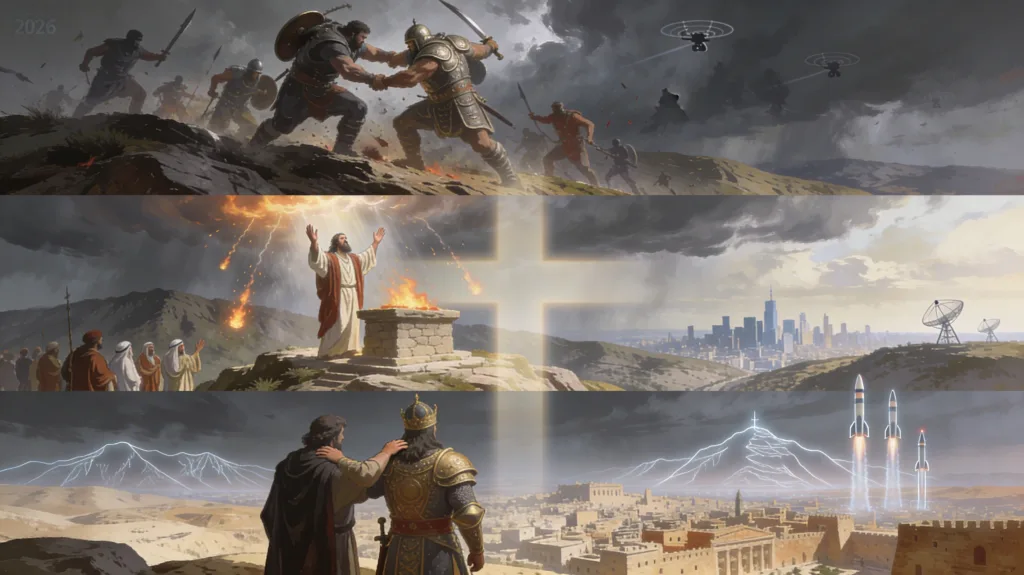
5.Is the Israel–Iran–US War a Sign of the End Times?
Whenever war erupts in or around Israel, believers think of Jesus’ words: “You will hear of wars and rumors of wars… Nation will rise against nation, and kingdom against kingdom.” Jesus said these are “the beginning of birth pains,” not necessarily the final contractions.
Some Christians connect modern Iran (ancient Persia) with prophetic passages like Ezekiel 38–39, where a coalition of nations attacks Israel before God dramatically intervenes. Others see the current war as part of a broader pattern of end-times shakings rather than a direct fulfillment of one specific prophecy.
Here is the key: even if we cannot label this war as “the” fulfillment of a particular passage, the Bible is clear that:
-
Wars will increase as we move closer to Jesus’ return.
-
Israel will remain a focal point in end-times events.
-
God will ultimately bring history to a climactic resolution in Christ.
Therefore, instead of trying to pin every missile strike to a verse, we live ready—repentant, prayerful, and focused on the Gospel
6. How God Uses War for Good Without Calling War Good
Romans 8:28 promises that God works all things together for good for those who love Him. That includes wars, disasters, and personal pain. Here are some ways God may be using the 2026 war:
-
Shaking nations out of complacency and pride, exposing false security in oil, weapons, or politics.
-
Opening doors for the Gospel among soldiers, refugees, and entire communities who might never have been open before.
-
Purifying the Church, calling believers out of lukewarm faith into urgent prayer, holiness, and mission.
-
Judging oppressive regimes, similar to how He judged violent empires in the Old Testament.
For example, reports already suggest internal crises in Iran’s leadership and deep uncertainty among its people after Khamenei’s death and the heavy strikes. If this war leads to greater freedom, reform, or even revival among Iranians, that would be a way God has brought good out of terrible circumstances.
War itself is a tragedy; the good is what God sovereignly pulls out of the wreckage.
7.Practical Application: How Should Christians Respond to War?
If war can be part of God’s permitted plan, how do we live faithfully when we hear about the Israel–Iran–US conflict?
7.1 Respond in Prayer, Not Panic
Instead of doom-scrolling, we can:
-
Pray for peace and de-escalation.
-
Pray for leaders in Israel, Iran, the US, and neighboring countries to act with wisdom and restraint.
-
Pray for believers on all sides, that they would be strong witnesses for Christ.
Prayer aligns our hearts with God’s plan rather than our fears.
7.2 Seek Understanding, Not Simple Slogans
We must resist shallow takes like “War is always good” or “War is always outside God’s will.” Scripture is more honest: war is a product of human sin, yet God can direct it for His purposes. Studying the Bible, church teaching on just war, and reliable reporting helps us respond with wisdom.
7.3 Live Ready for Jesus’ Return
Whether this conflict is directly prophetic or not, it is one more reminder that history is moving toward a conclusion. We should:
-
Turn from hidden sin.
-
Recommit to God’s calling in our lives.
-
Share the Gospel while there is still time.
Putting It All Together: Is War God’s Plan?
So, is war God’s plan?
-
War is never God’s ideal plan, because His ultimate design is shalom—perfect peace in His Kingdom.
-
War can be part of God’s sovereign plan in a fallen world as He judges evil, protects His people, and advances His purposes.
-
The current Israel–Iran–US war in 2026 is not outside God’s control, and He can use it in ways we cannot fully see yet.
As believers, we are called to hold two truths in tension: we grieve war as a result of sin, and yet we trust that nothing is outside the hands of a sovereign, good, and wise God.
Also Read: Spiritual Warfare for Believers: Stand Strong & Win — Understand how to fight your spiritual battles and overcome the enemy through the power of Christ.