

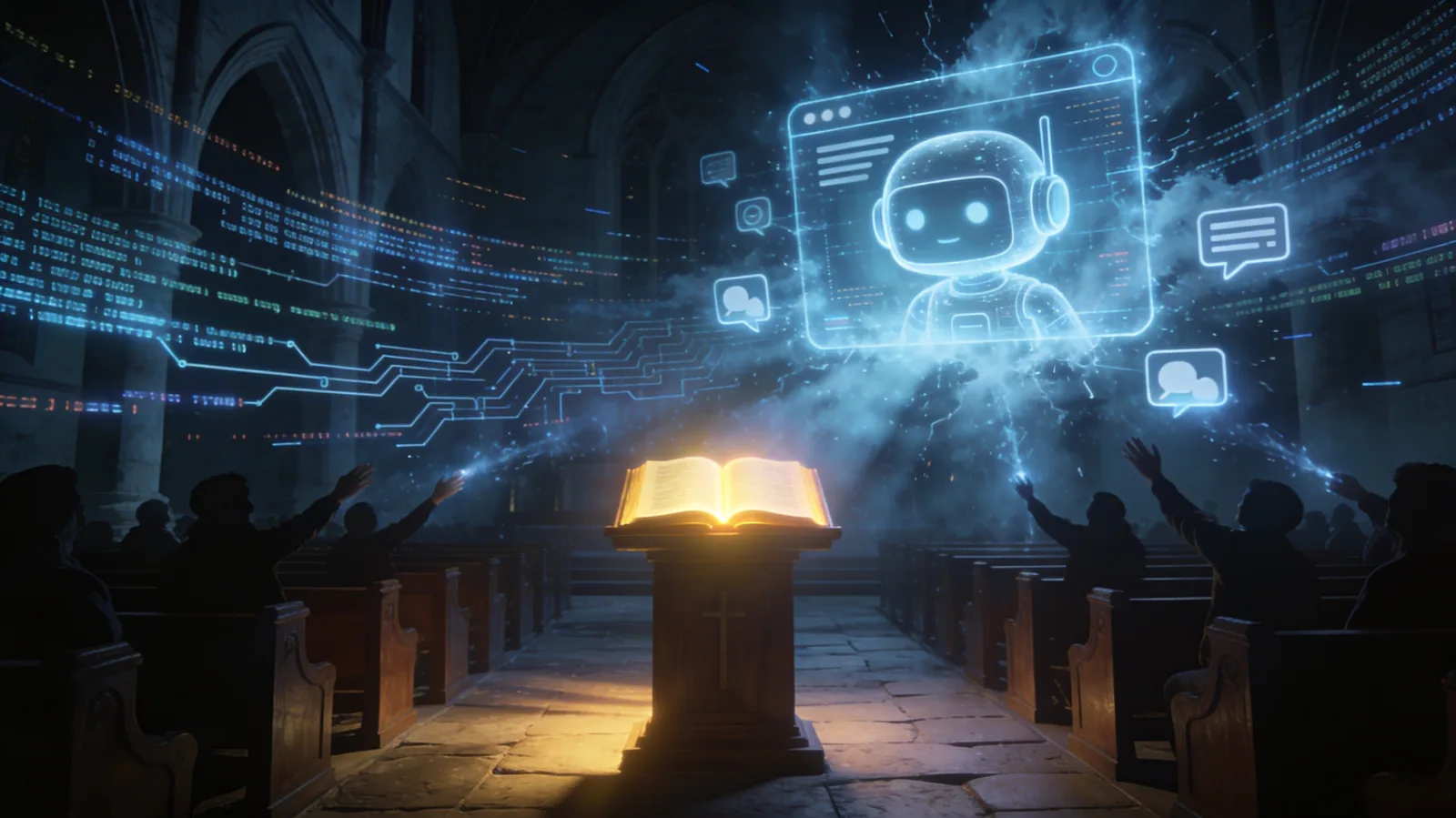
A New Kind of “Pastor” in Your Pocket
Imagine opening your phone, typing “I feel spiritually numb,” and getting a loving, Bible‑flavored reply in five seconds. No waiting for office hours. No awkward small talk. Just instant comfort.
A New Kind of “Pastor” in Your PocketImagine opening your phone, typing “I feel spiritually numb,” and getting a loving, Bible‑flavored reply in five seconds. No waiting for office hours. No awkward small talk. Just instant comfort.
A Barna‑Gloo study finds that nearly one‑third of U.S. adults now believe AI spiritual advice is as trustworthy as their pastor’s, and among Gen Z and millennials the number jumps to around 40%. Suddenly, “Am I obeying God?” and “What should I pray about?” are questions many believers are asking a chatbot instead of sitting across from a pastor.
So here’s the burning question we’re going to unpack: Can AI‑driven chatbots really replace pastors, or are they just a digital tool that can never carry the weight of shepherding souls?

The Rise of AI in Christian Spaces
AI isn’t just for generating marketing copy anymore. Churches, Bible app companies, and pastors themselves are using AI for:
- • Sermon prep and Bible‑study research
- • Personalized devotional content and prayer outlines
- • Virtual \"chat priests\" or AI avatars that quote Scripture and offer guidance
One survey of Protestant pastors shows over 40% already use AI for Bible study or sermon preparation, and some are even experimenting with AI to answer congregants’ questions or role‑play tough conversations.
On the flip side, Barna‑Gloo data reveals that about one‑third of practicing Christians say AI spiritual advice is “as trustworthy” as a pastor’s, while a quarter of Gen Z and millennials strongly lean into digital guidance.
In other words, AI is no longer science fiction in the church. It’s already changing how people get spiritual counsel.
Where AI Can Actually Help Your Faith Journey
Before we rush to “AI = anti‑Christian,” let’s be honest: AI can serve as a powerful helper, not a rival, when used wisely.
1. Bible study and research on demand
AI can:
- • Quickly summarize passages, trace themes across Scripture, and suggest related verses.
- • Help you generate prayer outlines, journal prompts, and devotionals based on a specific verse or topic.
Pastors who use AI in sermon prep report saving hours of research and outlining, which frees them for more relational shepherding.
2. Accessibility and 24/7 support
For many believers, pastors are overstretched. AI can:
- • Offer basic Scriptural reassurance at 2 a.m. when someone is anxious or overwhelmed.
- • Provide quick answers for factual questions (timeline of the Bible, definitions of theological terms, etc.).
3. Cultural and generational bridges
AI‑driven chatbots can “translate” ancient texts into modern language, making Scripture feel less intimidating, especially for younger audiences who live inside their phones.
So in these ways, AI can deepen discipleship — as long as it points you back to the Bible and to real‑life community, not away from them.
Where AI Falls Short: Why the Pastor Can’t Be Replaced
Here’s the hard truth: discerning God’s will, walking through brokenness, and discerning spiritual deception require more than data‑driven answers.
1. AI has no soul, no indwelling spirit.
A chatbot can quote the Bible. It can even generate a sermon that sounds godly. But it cannot be born again, cannot grieve, and cannot carry the weight of pastoral responsibility before God.
As one pastor puts it: AI can “imitate the words of Jesus,” but it cannot imitate the heart of Jesus.
2. AI cannot truly know your story
Pastoral care is not algorithmic. A good pastor:
- • Remembers your late‑night phone call three years ago.
- • Notices when your smile doesn’t reach your eyes.
- • Weighs your family history, your church culture, and your specific pride or idols before speaking.
AI, by contrast, responds to inputs, not to your whole life. It can’t “see” what the Holy Spirit is revealing in your circumstances
3. AI can feed your “itching ears.\"
Scripture warns that people will stack up teachers who tell them what they want to hear, not what they need.
AI‑trained models can easily reinforce your preferences, not push you toward repentance, holiness, and costly obedience.
That’s why Barna researchers note that while AI can support spiritual growth, it does not replace the local‑church context of accountability, liturgy, and shared life.
AI Bible interpretation tools helping Christians study Scripture”
Trust in AI vs. Trust in Bible Truth
The tension isn’t really “AI vs. pastor.” It’s “AI vs. Scripture as the final authority.”
What the numbers reveal
- • About 30% of U.S. adults say AI spiritual advice is as trustworthy as a pastor’s.
- • Among Gen Z and millennials, that rises to ~40%.
But here’s the counter‑trend:
- • Most pastors still view AI as “concerning” or “scary,” even while using it heavily.
- • About three‑quarters of pastors affirm that God can work through AI, but they also insist it cannot replace the role of the shepherding pastor.
A simple grid to test spiritual AI advice
Before you accept AI counsel, ask:
- 1. Does it align clearly with Scripture?
- 2. Does it push me toward humility, repentance, and community — or just comfort and convenience?
- 3. Would my pastor or a mature believer in my church agree with this?
If the answer to any of those is “no,” treat the AI’s words as a conversation starter, not a final verdict
How to Use AI in a Way That Honors God
AI isn’t evil. But it’s also not a replacement for the Holy Spirit, the church, or faithful shepherds. Here’s a practical framework:
1. Treat AI as a study tool, not a source
- • Use it to clarify meaning, summarize passages, and brainstorm applications—then cross‑check with trusted commentaries, pastors, and your own Bible‑reading.
- • Never let AI override clear biblical teaching or the godly counsel of your church leaders.
2. Stay anchored in real‑life community
- • When you’re wrestling with a major decision, talk to your pastor, small‑group leader, or mature Christian friend — not a chatbot.
- • Let AI serve as a supplement, not a substitute, for Sunday worship, prayer groups, and fasting together.
3. Protect your spiritual discretion
- • Be cautious with AI that “answers prayer” or claims to reveal “God’s specific will” for your life.
- • Remember: the Bible is sufficient; AI is optional.
Final Word: AI Can’t Shepherd, But the Church Can
AI can write a sermon, generate a devotional, and even quote Isaiah 40:31. But only the Holy Spirit can breathe those words into your heart and make them take root in your life.
The fact that 1 in 3 Americans now see AI as a pastor‑equivalent should wake us up, not panic us. It’s an invitation for the church to:
- • Be more relational, more incarnational, more present.
- • Embrace good tools like AI while fiercely guarding the uniqueness of Christ‑centered, Spirit‑filled, Bible‑grounded pastoral care.
So the next time your phone suggests a “spiritual answer” in seconds, ask yourself: Am I outsourcing discernment to an algorithm, or am I letting Scripture and Spirit‑filled shepherds lead me home?
>
A Barna‑Gloo study finds that nearly one‑third of U.S. adults now believe AI spiritual advice is as trustworthy as their pastor’s, and among Gen Z and millennials the number jumps to around 40%. Suddenly, “Am I obeying God?” and “What should I pray about?” are questions many believers are asking a chatbot instead of sitting across from a pastor.
So here’s the burning question we’re going to unpack: Can AI‑driven chatbots really replace pastors, or are they just a digital tool that can never carry the weight of shepherding souls?
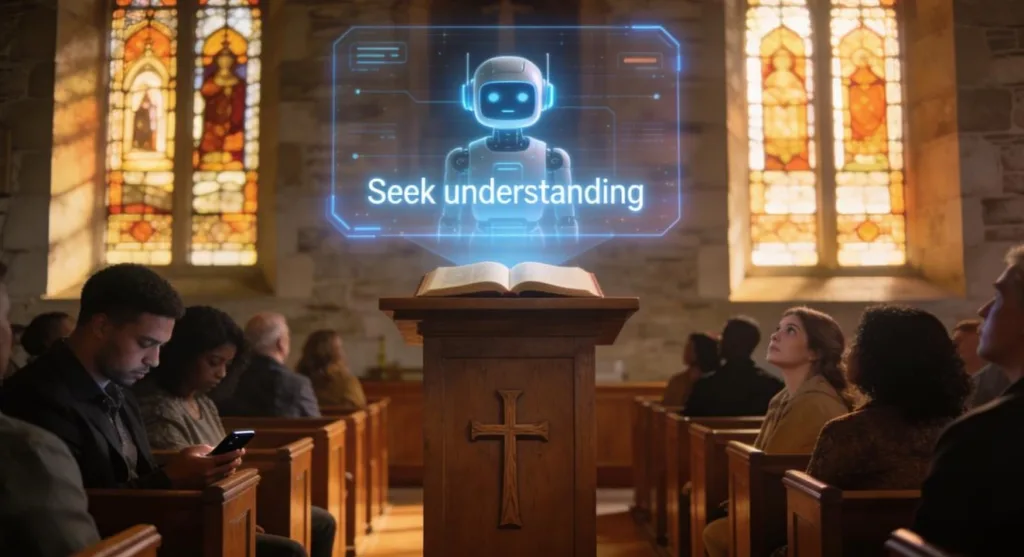
The Rise of AI in Christian Spaces
AI isn’t just for generating marketing copy anymore. Churches, Bible app companies, and pastors themselves are using AI for:
-
Sermon prep and Bible‑study research
-
Personalized devotional content and prayer suggestions
-
Virtual "chat priests" or AI avatars that quote Scripture and offer guidance
One survey of Protestant pastors shows over 40% already use AI for Bible study or sermon preparation, and some are even experimenting with AI to answer congregants’ questions or role‑play tough conversations.
On the flip side, Barna‑Gloo data reveals that about one‑third of practicing Christians say AI spiritual advice is “as trustworthy” as a pastor’s, while a quarter of Gen Z and millennials strongly lean into digital guidance.
In other words, AI is no longer science fiction in the church. It’s already changing how people get spiritual counsel.
Where AI Can Actually Help Your Faith Journey
Before we rush to “AI = anti‑Christian,” let’s be honest: AI can serve as a powerful helper, not a rival, when used wisely.
1. Bible study and research on demand
AI can:
-
Quickly summarize passages, trace themes across Scripture, and suggest related verses.
-
Help you generate prayer outlines, journal prompts, and devotionals based on a specific verse or topic.
Pastors who use AI in sermon prep report saving hours of research and outlining, which frees them for more relational shepherding.
2. Accessibility and 24/7 support
For many believers, pastors are overstretched. AI can:
-
Offer basic Scriptural reassurance at 2 a.m. when someone is anxious or overwhelmed.
-
Provide quick answers for factual questions (timeline of the Bible, definitions of theological terms, etc.).
3. Cultural and generational bridges
AI‑driven chatbots can “translate” ancient texts into modern language, making Scripture feel less intimidating, especially for younger audiences who live inside their phones.
So in these ways, AI can deepen discipleship — as long as it points you back to the Bible and to real‑life community, not away from them.
Where AI Falls Short: Why the Pastor Can’t Be Replaced
Here’s the hard truth: discerning God’s will, walking through brokenness, and discerning spiritual deception require more than data‑driven answers.
1. AI has no soul, no indwelling spirit.
A chatbot can quote the Bible. It can even generate a sermon that sounds godly. But it cannot be born again, cannot grieve, and cannot carry the weight of pastoral responsibility before God.
As one pastor puts it: AI can “imitate the words of Jesus,” but it cannot imitate the heart of Jesus.
2. AI cannot truly know your story
Pastoral care is not algorithmic. A good pastor:
-
Remembers your late‑night phone call three years ago.
-
Notices when your smile doesn’t reach your eyes.
-
Weighs your family history, your church culture, and your specific pride or idols before speaking.
AI, by contrast, responds to inputs, not to your whole life. It can’t “see” what the Holy Spirit is revealing in your circumstances
3. AI can feed your “itching ears."
Scripture warns that people will stack up teachers who tell them what they want to hear, not what they need.
AI‑trained models can easily reinforce your preferences, not push you toward repentance, holiness, and costly obedience.
That’s why Barna researchers note that while AI can support spiritual growth, it does not replace the local‑church context of accountability, liturgy, and shared life.

Trust in AI vs. Trust in Bible Truth
The tension isn’t really “AI vs. pastor.” It’s “AI vs. Scripture as the final authority.”
What the numbers reveal
-
About 30% of U.S. adults say AI spiritual advice is as trustworthy as a pastor’s.
-
Among Gen Z and millennials, that rises to ~40%.
But here’s the counter‑trend:
-
Most pastors still view AI as “concerning” or “scary,” even while using it heavily.
-
About three‑quarters of pastors affirm that God can work through AI, but they also insist it cannot replace the role of the shepherding pastor.
A simple grid to test spiritual AI advice
Before you accept AI counsel, ask:
-
Does it align clearly with Scripture?
-
Does it push me toward humility, repentance, and community — or just comfort and convenience?
-
Would my pastor or a mature believer in my church agree with this?
If the answer to any of those is “no,” treat the AI’s words as a conversation starter, not a final verdict
How to Use AI in a Way That Honors God
AI isn’t evil. But it’s also not a replacement for the Holy Spirit, the church, or faithful shepherds. Here’s a practical framework:
1. Treat AI as a study tool, not a source
-
Use it to clarify meaning, summarize passages, and brainstorm applications—then cross‑check with trusted commentaries, pastors, and your own Bible‑reading.
-
Never let AI override clear biblical teaching or the godly counsel of your church leaders.
2. Stay anchored in real‑life community
-
When you’re wrestling with a major decision, talk to your pastor, small‑group leader, or mature Christian friend — not a chatbot.
-
Let AI serve as a supplement, not a substitute, for Sunday worship, prayer groups, and fasting together.
3. Protect your spiritual discretion
-
Be cautious with AI that “answers prayer” or claims to reveal “God’s specific will” for your life.
-
Remember: the Bible is sufficient; AI is optional.
Final Word: AI Can’t Shepherd, But the Church Can
AI can write a sermon, generate a devotional, and even quote Isaiah 40:31. But only the Holy Spirit can breathe those words into your heart and make them take root in your life.
The fact that 1 in 3 Americans now see AI as a pastor‑equivalent should wake us up, not panic us. It’s an invitation for the church to:
-
Be more relational, more incarnational, more present.
-
Embrace good tools like AI while fiercely guarding the uniqueness of Christ‑centered, Spirit‑filled, Bible‑grounded pastoral care.
So the next time your phone suggests a “spiritual answer” in seconds, ask yourself: Am I outsourcing discernment to an algorithm, or am I letting Scripture and Spirit‑filled shepherds lead me home?