


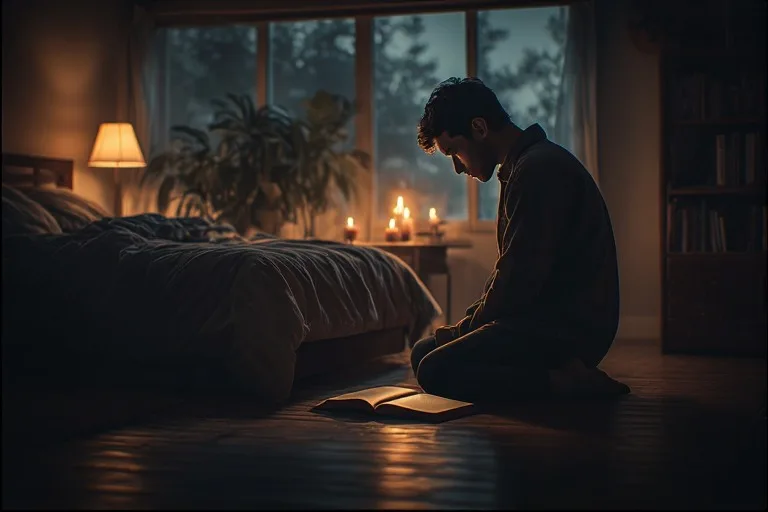
Pray at 3 AM: Biblical Foundations and Practical Steps to Transform Your Prayer Life
Have you ever considered why some of the most spiritually vibrant Christians throughout history chose to pray at 3 AM? This practice isn't just about waking early—it's about encountering God before the world makes its demands on your attention.
The pre-dawn hours offer something unique. Silence. Stillness. Space to hear God's voice without competing noise. Moreover, when you rise at 3 AM to pray, you demonstrate that meeting with God matters more than your comfort.
This isn't legalism. It's strategic spirituality. However, knowing the benefits and actually waking up at 3 AM are two very different things. Therefore, this guide addresses both the biblical foundation for early morning prayer and the practical strategies that make it sustainable.
The Biblical Pattern of Early Morning Prayer
Scripture consistently shows God's people seeking Him in the early hours. Jesus Himself modeled this practice. Mark 1:35 tells us, "Very early in the morning, while it was still dark, Jesus got up, left the house and went off to a solitary place, where he prayed."
Notice the specifics. Very early. Still dark. Solitary place. Jesus prioritized communion with the Father before ministry, before crowds, before demands.
David wrote in Psalm 5:3, "In the morning, Lord, you hear my voice; in the morning I lay my requests before you and wait expectantly." He established a pattern of morning prayer because he understood the power of starting his day in God's presence.
Similarly, the prophet Isaiah wrote about God awakening him morning by morning to listen (Isaiah 50:4). This wasn't accidental. Consequently, these biblical examples reveal a deliberate choice to meet God first.
Why 3 AM Specifically Matters
The hour matters less than the principle. However, 3 AM provides unique advantages that other times don't offer.
First, the world sleeps. Your phone doesn't buzz. Emails don't arrive. Children don't need you. In addition, your mind hasn't yet filled with the day's concerns. You bring God your attention instead of your exhaustion.
Second, you demonstrate priority. Anyone can pray when convenient. Waking at 3 AM shows God He's worth the sacrifice. Furthermore, this act of will breaks the power of comfort-seeking that dominates modern Christianity.
Third, you set the day's spiritual tone. Starting in prayer changes everything that follows. As a result, decisions align with God's will more naturally. Reactions become responses. Anxiety diminishes because you've already placed the day in His hands.
Nevertheless, these benefits require you to actually wake up. That's where most people fail.
The 30-Day Challenge Framework
Building any habit requires consistency over time. Research suggests 30 days establishes neural pathways that make behaviors automatic. Therefore, commit to 30 consecutive days of 3 AM prayer before evaluating whether to continue.
This timeframe accomplishes several things. First, it pushes past initial resistance. The first week feels brutal. Week two remains difficult. However, week three often brings breakthrough. By week four, your body adjusts and the practice feels more natural.
Second, 30 days provides sufficient data. You'll experience various conditions—good sleep, poor sleep, stressful days, peaceful days. Consequently, you'll discover what actually works rather than relying on untested theories.
Third, the defined endpoint prevents overwhelm. "Forever" feels impossible. Thirty days feels doable. Moreover, you can always choose to continue after completing the challenge.
Overcoming the Physical Barriers
Your body will resist waking at 3 AM. This resistance isn't spiritual warfare—it's biology. Nevertheless, specific strategies overcome these physical barriers.
Adjust Your Sleep Schedule Gradually
Don't jump from waking at 7 AM to 3 AM overnight. Instead, shift your wake time by 15 minutes every three days. This gradual adjustment allows your circadian rhythm to adapt. Furthermore, it prevents the shock that causes people to quit after one miserable morning.
Calculate backward from your target. If you normally wake at 7 AM and want to reach 3 AM, you need to shift three hours. At 15 minutes per three-day increment, you'll need approximately six weeks to fully transition. However, you can start the 30-day challenge once you reach 5 AM, then continue adjusting during the challenge.

Protect Your Sleep Duration
Waking at 3 AM doesn't mean sleeping less. It means going to bed earlier. Therefore, if you need seven hours of sleep, you must be asleep by 9 PM.
This requires ruthless evening discipline. Set a bedtime alarm for 8 PM. Use that hour to prepare for bed completely. In addition, eliminate screens by 7:30 PM. Blue light disrupts melatonin production and makes falling asleep difficult.
Your bedroom environment matters significantly. Keep it cool, dark, and quiet. Moreover, use blackout curtains and consider a white noise machine if needed. These investments pay dividends in sleep quality.
Use Strategic Alarm Placement
Put your alarm across the room. When it requires physical movement to silence, you're far less likely to hit snooze. Furthermore, the act of standing fully wakes your body.
Consider using a sunrise alarm clock that gradually increases light. These work with your body's natural waking mechanisms. As a result, waking feels less jarring than traditional alarms.
Some people find success with multiple alarms at two-minute intervals. However, this can fragment sleep for household members. Choose methods that work within your living situation.
Creating Your 3 AM Prayer Structure
Waking at 3 AM accomplishes nothing if you stumble around unsure what to do. Therefore, establish a clear prayer structure before starting your challenge.
The First 15 Minutes: Transition Time
Don't expect to wake and immediately enter deep prayer. Your body needs transition time. Therefore, use the first 15 minutes for physical preparation.
Drink water immediately. Your body dehydrates overnight. Hydration increases alertness and mental clarity. In addition, consider light stretching or walking to increase blood flow.
Prepare your space. Have your Bible, journal, and any other prayer tools ready the night before. Consequently, you eliminate decision fatigue when your willpower is lowest.
The Core Prayer Time: 45-60 Minutes
Structure this time into distinct segments. Variety maintains engagement and addresses different prayer dimensions.
Worship (10 minutes): Begin by focusing on God's character. Read a psalm aloud. Declare His attributes. This shifts your attention from yourself to Him. Moreover, worship realigns your perspective before making requests.
Scripture (15 minutes): Read slowly and meditatively. Don't rush through chapters. Instead, focus on smaller passages and let them penetrate deeply. Furthermore, ask God to speak through His Word specifically for this day.
Confession (5 minutes): Acknowledge specific sins. Don't be vague. Name what you've done wrong and receive God's forgiveness. In addition, this practice keeps your conscience clear and maintains intimacy with God.
Intercession (15 minutes): Pray for others systematically. Create a weekly prayer list so you're covering different people and needs each day. Consequently, your intercession becomes comprehensive rather than reactive.
Personal Requests (10 minutes): Bring your needs, concerns, and decisions to God. Be specific. However, balance requests with thanksgiving for what He's already provided.
Listening (10 minutes): Sit quietly. Journal what God brings to mind. This often proves the most neglected yet most valuable segment. Nevertheless, hearing from God requires creating space to listen.
Winning the Mental Battle
Physical preparation addresses only half the challenge. Your mind will generate compelling reasons to quit. Therefore, prepare responses to common mental obstacles before they arise.
"I'm Too Tired"
Tiredness often reflects habit more than actual sleep deprivation. Your body grows accustomed to current patterns. However, it adapts to new patterns with consistency.
Moreover, tiredness at 3 AM doesn't necessarily mean exhaustion at 10 AM. Many people report higher energy throughout the day after establishing early prayer routines. The initial discomfort isn't permanent.
"I Can Pray Later"
Technically true. Spiritually dangerous. "Later" rarely happens with the same quality or duration. Furthermore, starting your day in prayer fundamentally differs from adding prayer to an already-full schedule.
God deserves your firstfruits—your best attention, not your leftovers. Consequently, later prayer often becomes rushed, distracted, or eliminated entirely.
"This Feels Legalistic"
Legalism means attempting to earn God's favor through actions. However, disciplined prayer flows from love, not merit-seeking. In addition, structure enables freedom rather than restricting it.
Jesus maintained prayer disciplines. Was He legalistic? Obviously not. Similarly, your commitment to early prayer demonstrates devotion, not duty.

Making It Sustainable Long-Term
The 30-day challenge builds the habit. Sustainability requires different strategies. Therefore, consider these approaches for maintaining 3 AM prayer beyond the initial month.
Build in Grace Days
Life happens. Sickness, travel, and unusual circumstances disrupt routines. Instead of abandoning the practice entirely when you miss a day, plan for flexibility. For example, allow yourself two grace days per month where sleeping later is acceptable.
This prevents all-or-nothing thinking that destroys habits. Moreover, it acknowledges you're human without using that as an excuse for inconsistency.
Adjust for Seasons
Parents with newborns, people working night shifts, or those facing major life transitions may need to modify this practice. The principle of early prayer matters more than the exact hour. Consequently, seeking God first in your day might mean 6 AM during certain seasons.
Don't let inability to maintain 3 AM specifically cause you to abandon early prayer entirely. Furthermore, God cares about your heart posture more than your alarm setting.
Find Accountability
Share your commitment with someone who will check on your progress. This external accountability strengthens internal resolve. In addition, you might find someone to join you, either in person or through a morning text exchange.
Addressing Common Obstacles
Despite your best efforts, you'll encounter specific challenges. Therefore, prepare solutions in advance.
Waking But Not Getting Up
This differs from not hearing your alarm. You wake, acknowledge the time, then choose to stay in bed. Combat this by immediately sitting up when you wake. Lying down invites rationalizing. Sitting up activates decision-making and movement.
Falling Asleep During Prayer
If you consistently fall asleep while praying, adjust your approach. Pray standing or walking instead of sitting. Moreover, increase the room's lighting and keep the temperature cooler. Physical comfort makes staying awake harder.
In addition, evaluate whether you're genuinely getting enough sleep. Falling asleep during prayer might indicate sleep deprivation rather than poor spiritual discipline.
Weekend Disruptions
Many people maintain weekday routines but abandon them on weekends. However, inconsistency makes Monday morning significantly harder. Therefore, maintain your 3 AM schedule on weekends as well, at least during your initial 30-day challenge.
You can adjust later for occasional weekend variations. Nevertheless, establish the pattern first before introducing exceptions.
What to Expect Spiritually
Early morning prayer produces measurable spiritual fruit. However, the benefits don't appear uniformly across your 30-day journey. Therefore, understanding the typical progression helps you persist through difficult phases.
Week one often brings initial enthusiasm followed by harsh reality. The novelty wears off quickly. Moreover, your body protests the change. Spiritually, you might feel nothing special. That's normal. Press through.
Week two typically represents the hardest stretch. The challenge no longer feels new, and the finish line seems distant. Nevertheless, this week builds character more than any other. Choosing to continue when feeling nothing demonstrates genuine commitment.
Week three often brings breakthrough. Your body adjusts. Prayer time feels less forced. In addition, you begin noticing spiritual fruit—more peace, clearer guidance, stronger resistance to temptation. These rewards fuel continued effort.
Week four establishes the pattern. Missing your prayer time starts feeling wrong. Furthermore, you've proven to yourself that you can maintain this discipline. Confidence grows.
Beyond 30 days, early morning prayer often becomes cherished rather than challenging. You'll protect this time fiercely because you've experienced its value. Moreover, you'll notice spiritual dullness on days when you skip it.
Biblical Examples to Inspire Consistency
When commitment wavers, remember you're joining a long tradition. Abraham rose early to stand before the Lord (Genesis 19:27). Moses got up early to meet God on the mountain (Exodus 34:4). Joshua rose early when facing impossible odds at Jericho (Joshua 6:12).
These weren't casual believers. They were people entrusted with world-changing assignments. Consequently, they understood that divine assignments require divine encounters. Early morning prayer positioned them to receive what God wanted to impart.
You're not less busy than they were. You don't face smaller challenges. However, you have the same access to God they did. Therefore, you can adopt the same practices that kept them spiritually vital.
For more insight into biblical prayer patterns, Got Questions provides excellent resources on Christian prayer practices.

Practical Preparation Checklist
Success requires preparation. Therefore, complete these steps before beginning your 30-day challenge:
Evening Preparations:
- Set a firm bedtime that allows adequate sleep
- Prepare your prayer space the night before
- Lay out comfortable clothes for easy dressing
- Eliminate evening activities that delay bedtime
- Stop screen time at least 90 minutes before sleep
Morning Preparations:
- Place your alarm across the room
- Prepare water and any needed supplies
- Create a prayer outline or structure
- Have your Bible and journal accessible
- Consider preparing coffee or tea in advance
Mental Preparations:
- Write down your "why" for this commitment
- Identify likely excuses and prepare responses
- Choose an accountability partner
- Decide your grace day policy in advance
- Set a specific start date rather than "soon"
Beyond the Challenge: Lifelong Practice
The 30-day challenge isn't the goal—it's the gateway. Once you've established the habit, early morning prayer becomes a lifelong source of spiritual strength. However, maintaining it requires ongoing intentionality.
Periodically evaluate and refresh your prayer structure. What worked initially might need adjustment over time. Furthermore, different life seasons might require different approaches. Stay flexible in methods while remaining committed to the principle.
Continue learning about prayer. Read books by prayer warriors. Study Scripture's teaching on prayer. Desiring God offers excellent articles on developing a deeper prayer life that can enrich your practice.
Most importantly, remember that early morning prayer serves relationship, not religion. You're meeting with a Person, not completing a task. Consequently, let love drive your discipline rather than duty.
Conclusion
Praying at 3 AM isn't for everyone, but it might be for you. The practice has biblical foundations, clear spiritual benefits, and proven strategies for successful implementation. Moreover, the 30-day challenge provides a structured path from aspiration to reality.
Your first morning will feel hard. So will your tenth. However, by day thirty, you'll have encountered God in ways that sleeping later would have prevented. You'll carry spiritual strength that comes only from consistent, sacrificial pursuit of His presence.
The question isn't whether early morning prayer works. Scripture and countless testimonies confirm its value. Therefore, the only remaining question is whether you'll actually do it. Will you set your alarm for 3 AM tomorrow and begin?
Your spiritual life six months from now depends partly on how you answer that question. Choose the harder path now for the richer relationship later. The sacrifice is temporary. The fruit is eternal.