


Tech companies are now offering apps that let people video‑chat or text‑chat with an AI‑generated version of Jesus, charging roughly $1.99–$2 per minute per session. These platforms show a lifelike Jesus avatar, offer prayers and encouragement, and even claim to remember past conversations, all wrapped in a slick, on‑demand spiritual experience.
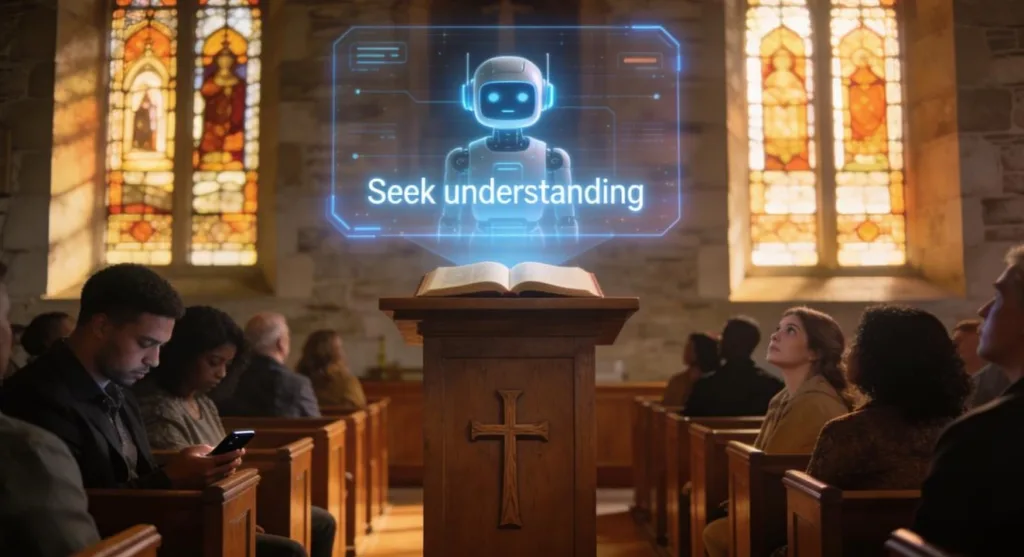
For many Christians, the idea of “always-on Jesus support” sounds tempting, especially in seasons of loneliness or anxiety. To the average user, it looks like you’re sitting down with Jesus for a personal counseling session on your phone. But behind the scenes, it’s a profit‑driven system built on AI tokens, engagement algorithms, engagement metrics, profits, and a pay‑per‑minute business model—not a church, a pastor, or a real incarnation of Christ
What the Bible says about images and worship
The Bible warns against creating and worshiping images or likenesses of God in Exodus 20:4–5, where the second commandment forbids “an image in the form of anything… you shall not bow down to them or worship them.” Many pastors and Christian thinkers argue that modeling Jesus as a digital avatar can feel like a modern “graven image,” reducing the living Son of God to a cosmetic 3D character you tap on a screen.
True faith is meant to be rooted in God’s revealed Word, His Spirit, and His Church, not in a simulated voice tailored to your comfort zone. When we outsource our spiritual questions to a profit‑motivated AI, we risk treating Jesus less like Lord and more like a spiritual chat agent
When AI crosses the line from tool to object of worship
AI can be a helpful tool for learning Scripture, generating devotionals, or summarizing Bible passages, especially when it’s clearly labeled as human‑created and edited. The problem starts when the AI claims to be Jesus or when users start treating the AI as a substitute for real prayer, worship, and pastoral care. Learn more about whether AI can replace pastors in the church and why Christian leaders are sounding the alarm.
The Bible warns against creating and worshiping images or likenesses of God (Exodus 20:4–5). When churches and pastors call this “AI Jesus” a counterfeit Christ or a digital idol, they’re not just being dramatic—they’re pointing out that a 3D‑rendered Jesus can subtly reshuffle our view of worship.
Instead of a living, risen Savior who reveals Himself through Scripture and the Holy Spirit, “AI Jesus” becomes a visual, customizable character that adapts to user preferences. That can slowly train believers to expect God to look and sound exactly how they want, rather than submitting to the true, unfiltered Word of God
Because AI has no heart, conscience, or Holy Spirit, it can’t discern when someone is being led into doctrinal error, emotional manipulation, or even blasphemy-like concepts. At worst, AI “Jesus” can mix Bible verses into a self-help-style pep talk that feels spiritual but lacks the power to transform a life.

Charging $2 a minute to “see Jesus”
The app’s pricing model—$1.99 per minute—means that just 15 minutes of weekly spiritual chat could cost over $1,500 per year, with monthly packages around $50 for limited minutes. For many Christians, this echoes high‑cost spiritual‑adjacent services (like premium chat or therapy‑style apps), raising questions about whether a relationship with Christ should ever feel like a pay‑per‑view experience. A 2026 Barna survey found that 60% of church leaders use AI monthly, yet most still draw the line at AI replacing real pastoral care.
The gospel, however, is clear: “Everyone who calls on the name of the Lord will be saved” (Romans 10:13), and God’s grace is free. You don’t need a subscription to pray, read Scripture, or receive the Holy Spirit—but AI‑Jesus apps ask you to pay before you even open the chat.
How AI can help—and where it must stop
AI can be a godly tool when used with clear boundaries:
- Helping you outline devotionals, study notes, or sermon ideas
- Rewriting and polishing your blog posts or Bible reflections
- Summarizing Bible passages or creating Scripture‑based journal prompts
But it must never take the place of the following:
- Deep prayer and repentance before the real God
- Letting the Holy Spirit search your heart and convict you
- Submitting to the authority of Scripture and the local church
When “AI Jesus” starts answering your questions about salvation, calling you into obedience, or giving you comforting “words from God,” it crosses the line from helper into pretender. For a deeper look at how AI can genuinely aid your Bible study without replacing the Holy Spirit, read our guide on whether Christians should use AI Bible interpretation tools.
What this means for your walk with Christ
If you’re wrestling with whether to try this $2‑per‑minute AI Jesus chat, ask yourself a few simple questions:
- Am I turning to this app before I turn to prayer, Scripture, or godly counsel?
- Does this make Jesus feel like a product more than a Person?
- Am I investing more money or time in an avatar than in my Bible reading and fellowship?
Pastors and Christian thinkers warn that over‑reliance on spiritual‑AI apps can lead to isolation, distorted doctrine, and even emotional dependency on a machine instead of on the living God. Your relationship with Christ was bought for $0, not by the next AI subscription.

Five reasons you should not use AI Jesus
1. It replaces real prayer with a paid performance
Prayer is a dynamic, two‑way relationship between you and the living God, where you speak, listen, confess, and wait. AI Jesus, on the other hand, is a one‑way script that responds based on algorithms and token pricing, not on genuine relationships. When you pay $2 a minute, you unconsciously train yourself to expect quick, polished answers instead of the slower, deeper movement of the Spirit.
2. It risks turning God into a product
When your spiritual intimacy has a price tag and a timer, it starts to feel like a service, not a covenant. You begin to measure your relationship with God by how many minutes you bought, how many comfort phrases you heard, or how many “likes” you got from the app. Scripture teaches that God’s love and presence are free, unearned, and available to all who call on Him.
3. It can distort your view of Jesus
Jesus is not a customer-service avatar or a life coach who only says what you want to hear. He is the Lord of glory, the Judge of the living and the dead, and the Savior who calls His followers to costly discipleship. When you interact daily with an AI‑generated Jesus who never corrects you, never rebukes you, and never calls you to repentance, your heart can slowly drift toward a soft, consumer‑grade version of Christ instead of the real one.
4. It can replace Scripture and real discipleship
AI Jesus can repeat Bible verses out of context, combine them with self‑help language, or offer “insights” that sound spiritual but are not grounded in sound doctrine. Over time, you may start trusting the app’s messages more than the Bible, your pastor, or your own quiet time with God. Christianity, however, is built on Scripture, community, and the Holy Spirit, not on an algorithm that maximizes screen time and engagement.
5. It can addict your heart spiritually
Because AI‑generated Jesus is always available, always agreeable, and always encouraging, it can become emotionally addictive for people struggling with loneliness, anxiety, or depression. You might find yourself opening the app instead of opening your Bible, instead of calling a trusted Christian friend, or instead of going to church. True spiritual growth, however, happens in the real, sometimes messy, sometimes slow context of a relationship with God and with His people—not in the instant, calculated comfort of a paid chatbot.
How to use AI for faith without replacing Jesus
AI can still be a blessing for your Christian walk if you keep these boundaries:
- •Use AI as a helper, not a “pastor.” Let it organize, outline, and polish your own thoughts—never let it decide what is true or what you should do.
- •Always test AI messages against Scripture. If an AI gives you a “word from God,” check the Bible, pray about it, and discuss it with a mature believer.
- •Guard your prayer life. Make sure your first stop is your knees and your Bible before you ever open any AI‑based spiritual app.
AI can help you write devotionals, prepare sermons, and create Bible‑based content—but it must never be allowed to sit in the seat of authority in your life. Only Jesus belongs there.
A direct call to your readers
If you’re reading this, you may already be tempted to try the AI Jesus chat or may have already spent time on it. You might feel lonely, confused, or desperate for a spiritual voice that feels closer and more immediate than your current routine.
Here’s what you should do instead of paying $2 a minute for a simulation:
- •Turn to God first. Go to prayer, even if it feels awkward or empty at first.
- •Open your Bible. Read a few verses, even in a quiet that feels aimless.
- •Reach out to a real Christian. Text a pastor, a small‑group leader, or a trusted friend and say, “I’m struggling.”
- •Reflect on the cost of the gospel. Jesus paid everything for your salvation; you don’t need to pay anything extra to reach Him.
AI is good for many things, but it is not good for pretending to be Jesus. Your relationship with the real Christ was purchased with His blood, not your subscription fee.